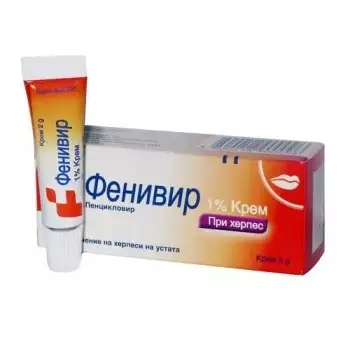
Fenivir cream 1% x2 g Perrigo
FENIVIR 1% cream 2 g Leaflet: information for the patient FENIVIR1% CreamPenciclovir FENIVIR1% CreamPenciclovir Read all of this leaflet carefully before you start using this medicine because it contains important information for you. Always use this medicine exactly as described in this leaflet or as your doctor or pharmacist has told you. Keep this leaflet. You may need to read it again. If you need further information or advice, ask your pharmacist. If you get any side effects, tell your doctor or pharmacist. This also includes any possible side effects not listed in this leaflet. See section 4. If you do not feel better after 4 days or your condition worsens, you should seek medical advice.
What this leaflet contains: 1. What FENIVIR is and what FENIVIR is used for 2. What you need to know before you use FENIVIR 3. How to use FENIVIR 4. Possible side effects 5. How to store FENIVIR 6. Contents of the pack and other information
1. What FENIVIR is and what it is used forFENIVIR is used to treat cold sores on the lips and around the mouth (herpes labialis). Cold sores are caused by a virus. The virus can remain inactive for a long time, but when stimulated, it multiplies and herpes develops. This can happen, for example, when your immune system is weakened by colds and flu or when you are exposed to strong sunlight. The virus causes a painful rash on the lips.
FENIVIR contains penciclovir, which is an antiviral drug that stops the virus from multiplying. By taking FENIVIR, you will cure herpes faster and reduce the duration of the pain. You will also shorten the time* during which herpes is a source of infection, although taking FENIVIR does not prevent the possibility of transmitting herpes to another person.
If you do not feel better after 4 days or your condition worsens, you should seek medical attention.
2. What you need to know before you use Fenivir Do not use FENIVIR if you are allergic to penciclovir, famciclovir, or any of the other ingredients of FENIVIR (listed in section 6). Warnings and precautions Talk to your doctor or pharmacist before using Fenivir.
FENIVIR should only be used for herpes on or around the lips. It is not recommended for use on mucous membranes (including the mouth, nose or genitals). Avoid applying FENIVIR near the eyes.
Before you start using FENIVIR, consult your doctor or pharmacist if: you are not sure whether the inflammation is herpes you have a reduced immune response or are taking other treatment that weakens your immune system (i.e. the body's resistance to infections is reduced), such as AIDS infection, bone marrow transplant or anti-cancer treatment.
ChildrenFenivir is not recommended for the treatment of children under 12 years of age.
Other medicines and Fenivir There are no reports of interactions with other medicines.
Tell your doctor or pharmacist if you are taking, have recently taken or might take any other medicines.
Pregnancy, breast-feeding and fertility If you are pregnant or breast-feeding, think you may be pregnant or are planning to have a baby, ask your doctor for advice before using this medicine. There are no data on fertility available.
Driving and using machines No adverse effects on the ability to drive and use machines have been observed.
Important information about some of the ingredients of FENIVIRFENIVIR contains cetostearyl alcohol, which may cause local skin reactions (e.g. contact dermatitis). It also contains propylene glycol, which may cause skin irritation. This product contains 416 mg of propylene glycol per gram.
3. How to use FENIVIR Always use this medicine exactly as described in this leaflet or as your doctor or pharmacist has told you.
Start treatment as soon as possible after the first symptoms (tingling and itching) appear. However, the cream can still be applied at the first signs of herpes. Always wash your hands before and after applying the cream. Squeeze a small amount onto your finger and apply it to the affected area.
Repeat this procedure every 2 hours during the day (about 8 times a day) for 4 consecutive days.
Consult your doctor if your symptoms persist or do not improve after the 4-day course of treatment.
Use in children and adolescents FENIVIR is not recommended for use in children under 12 years of age.
If you use more FENIVIR than you should: It is unlikely that a single application of a large amount of cream to the skin will cause side effects. However, some skin irritation may occur.
If you forget to use FENIVIR If you forget to apply the cream, apply it as soon as you remember. Then continue with the usual schedule.
In case of accidental ingestion FENIVIRFENIVIR is not dangerous if accidentally swallowed and does not require treatment, but it may cause irritation in the mouth. Consult your doctor or pharmacist if this happens to you.
If you have herpes, what basic precautions should you take? Remember that herpes is contagious.
If you have herpes, to avoid infecting other parts of your body with the virus, as well as transmitting it to other people, it is important to take the following precautions:
Avoid kissing, especially children; Avoid oral sex; Do not use shared items such as towels, cups, eating utensils, etc.; Do not pick at the cold sore, as this can prolong the healing process; Avoid touching your eyes. When the virus gets into your eyes, it can cause serious problems if it affects them. Do not share this cream with other people, even if they have the same symptoms as you.
If you have stopped using FENIVIR If you have any further questions on the use of this medicine, ask your doctor or pharmacist.,
4. Possible side effects Like all medicines, FENIVIR can cause side effects, although not everybody gets them. The side effects caused by FENIVIR are usually mild in intensity.
Some side effects are common (may affect up to 1 in 10 people): burning, stinging or tingling when applying the cream. The reactions usually go away quickly.
Allergic-type reactions such as allergic dermatitis, rashes, urticaria, itching and swelling have also been reported.
Reporting of side effects If you get any side effects, tell your doctor or pharmacist. This includes any possible side effects not listed in this leaflet. You can also report side effects directly via the national reporting system: Bulgaria Executive Agency for Medicines ul. "Damyan Gruev" № 81303 Sofia Tel.: +35 928903417 Website: www.bda.bg By reporting side effects, you can help to obtain more information on the safety of this medicine.
5. How to store FENIVIRD Keep out of the reach of children. Do not use FENIVIRD after the expiry date which is stated on the tube and carton. The expiry date refers to the last day of that month. Store below 30°C. Do not freeze. Medicines should not be thrown away via wastewater or household waste. Ask your pharmacist how to dispose of medicines you no longer need. These measures will help protect the environment.
6. Contents of the pack and other information What FENIVIR contains The active substance of your cream is called penciclovir. 1 g FENIVIR contains 10 mg penciclovir.
The other ingredients (excipients) are: white soft paraffin, liquid paraffin, cetostearyl alcohol, propylene glycol, cetomacrogol 1000, purified water.
What FENIVIR looks like and what the package contains FENIVIR is a homogeneous white cream in a 2 g aluminum tube.
Marketing Authorisation Holder Adriatic BST doo, Slovenia
Manufacturer: Omega Pharma International, BelgiumMedgenix Benelux NV, Belgium
For any information about this medicinal product, please contact the authorised representative of the Marketing Authorisation Holder for Bulgaria:
Pharma Support Services Ltd., Bulgaria
Date of last revision of this leaflet: August 2022.
Няма добавен състав за този продукт.
Няма добавен начин на употреба за този продукт.
There are no added contraindications to this product.
Customer Reviews
0 published reviews
There are no published reviews about this product yet.
Add a review
Your email address will not be published.
Полетата отбелязани със звездичка са задължителни.