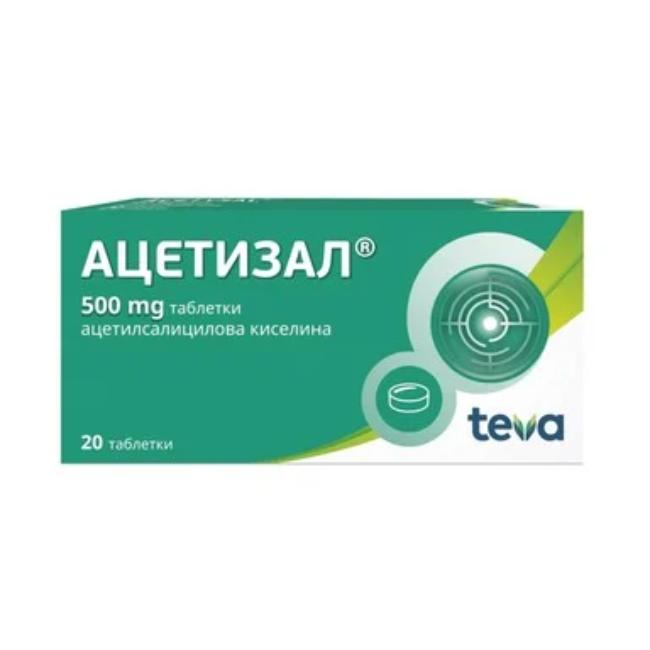
ACETIZEL 500 mg x 20 tablets TEVA
Acetysal is a medicinal product of the pharmaceutical company Teva, which, when administered in low doses, prevents the occurrence of heart diseases such as repeated myocardial infarction in patients with a previous myocardial infarction or unstable angina pectoris (chest pain), or stroke caused by clogged blood vessels. It has an analgesic, anti-inflammatory and antipyretic effect, and depending on the dose administered, it also exhibits an antirheumatic effect. Indications for pain and/or fever. Acetysal is suitable for symptomatic relief of mild to moderate pain of various origins: headache, toothache; acute and chronic inflammatory diseases of the upper respiratory tract; influenza and other viral diseases; acute infectious diseases, fever of unknown origin, etc.; Available in a pack of 20 tablets.
Method of use:
Adults: as a painkiller and antipyretic, take 1 to 4 tablets of Acetisal 500 mg with a minimum interval between doses of 4 to 6 hours (maximum daily dose 3 g) for a short period of time (from 1 to 3-4 days); For rheumatic diseases - 1-2 tablets of 500 mg 3 to 4 times a day for a long period under medical supervision; For the prevention of thrombotic conditions and heart attack, 3/4 tablet of 500 mg once a day, during or after meals; it is advisable to dissolve the tablet in a small amount of water in advance to reduce its irritating effect on the stomach.
For children over 12 years of age, according to a doctor's prescription: usually 1/2 to 1 tablet as needed, but not more than two to three times a day (do not use for longer than 2 to 3 days); for rheumatic diseases, the dose may be increased by the treating doctor and the period of administration may be extended.
Side effects: With prolonged use of higher doses (more than 3-4 tablets per day), undesirable side effects such as irritation, pain or heartburn may be observed; malaise or swelling of the intestines, increased gas formation; with prolonged use of high doses, they may cause hidden bleeding in the stomach and intestines, blood clotting disorders, dizziness, headache, tinnitus, rapid breathing (so-called salicylic intoxication), drowsiness, some fluid retention in the body; allergic reactions are observed regardless of the dose taken and can be expressed in various skin rashes, etc.
Overdose: In case of an overdose of Acetizal, severe irritation of the stomach and intestines, nausea, vomiting, blood clotting disorders, etc. may occur.
In severe intoxication after unintentionally taking very high doses of Acetylsalicylic acid, headache, nausea, vomiting and diarrhea, agitation and confusion, hallucinations, unexplained fever, visual disturbances, hearing disturbances (noise or "ringing" in the ears), rapid and shallow breathing, bloody urine, seizures, etc. Treatment - after emptying the stomach by inducing vomiting and taking medical charcoal, etc., immediate medical attention and admission to a hospital are necessary.
Anti-inflammatory effect: In rheumatic and non-rheumatic inflammatory and degenerative musculoskeletal diseases, symptomatic relief of symptoms, such as pain, swelling, redness and local increase in temperature in myalgia, musculoskeletal pain, joint pain, etc.;
Antiplatelet effect: Unstable angina (chest pain of cardiac origin); Acute myocardial infarction; Prevention of reinfarctions after myocardial infarction; Prevention of thrombosis and embolism (blood clotting in the vessels) after cardiovascular surgery (e.g. aorto-coronary shunts, coronary bypass, etc.); Prevention and reduction of transient ischemic attacks or stroke in the stage of clinical precursors; Long-term prevention of coronary artery thrombosis in patients with many risk factors for the development of coronary heart disease (CHD);
Contraindications: Acetizal is contraindicated: in case of allergy to the preparation or previous intolerance reactions to Acetizal or to other painkillers or anti-inflammatory drugs; in case of bleeding ulcers or other acute diseases of the gastrointestinal tract; in case of blood clotting problems such as hemophilia, thrombocytopenia, hemorrhagic conditions, etc.
Precautions and warnings
Some medical problems may be worsened by taking Acetizal, so consult your doctor if you have gastritis, stomach ulcer, duodenal ulcer or other gastrointestinal problems, such as colitis, inflammation of the gallbladder, etc., asthma, allergies, nasal polyps (currently or in the past), high blood pressure, kidney or liver disease, anemia, hemophilia or other blood clotting problems, heavy menstruation or uterine bleeding of various origins, gout (Acetizal may increase serum uric acid levels and thus provoke an attack of the disease);
Do not use Acetisal tablets that have an unpleasant sour smell (similar to the smell of vinegar); Acetisal should not be used for a long time (more than 10 days) and/or in high doses (more than 8 tablets in 24 hours, and for adults over 60 years of age more than four tablets in 24 hours) without a doctor's prescription; With longer use (more than 10 days), blood pressure should be controlled, especially in hypertensive patients; Acetisal is not recommended for use in children under three years of age; This dosage form of Acetisal® is not recommended for use in children under six years of age; Acetisal® should be given to children from 6 to 12 years of age only on doctor's prescription, especially if they have a high fever, flu or other viral infections, especially measles, as a rare but severe side effect (Rey's syndrome) may occur. Elderly people are more sensitive to salicylates and they may experience more frequent side effects, therefore they should be administered in reduced doses; It is recommended to stop therapy with Acetizal at least 5 days before surgical intervention to prevent bleeding; In the treatment of arthritis, the dose should not be changed more often than once a week according to a doctor's prescription in order to obtain the desired therapeutic effect without the risk of adverse effects.
Drug and other interactions: When taking Acetizal and some other medications at the same time, adverse interactions may occur, so it is advisable to warn your doctor if you are taking any of the following medications: anticoagulants (drugs against increased blood clotting); some antibiotics such as carbenicillin, cefamandole, ciprofloxacin, tetracycline; other painkillers and anti-inflammatory drugs; ketoconazole (antifungal); pentoxifylline, etc.
If you are taking multiple medications, consult your doctor about whether combining them with Acetylsalicylic acid is appropriate.
Pregnancy and lactation: The use of the preparation by pregnant women and women during lactation is not recommended. It is especially important not to use it in the last three months of pregnancy due to the risk of fetal damage or complications during childbirth;
Effects on ability to drive and use machines No contraindications have been identified.
Няма добавен състав за този продукт.
Няма добавен начин на употреба за този продукт.
There are no added contraindications to this product.
Customer Reviews
0 published reviews
There are no published reviews about this product yet.
Add a review
Your email address will not be published.
Полетата отбелязани със звездичка са задължителни.